Your Consultation
Gray Surroundings
To create the right circumstances for PCA, the process takes place in gray surroundings that have as little influence as possible on your own coloring. This includes the room, the cape that covers your clothing, and the scarf that may be used to cover your hair, especially if it is colored.
Draping
Draping is a process of placing two fabrics in known colors across your shoulders and comparing the effects. The analyst will work stepwise through 30 to 50 comparisons, taking note of changes in facial contour, clarity and smoothness of skin, and many other observations regarding your features. With each comparison, the analyst eliminates some Seasons in favor of others, until she arrives at your Season.
The Palette
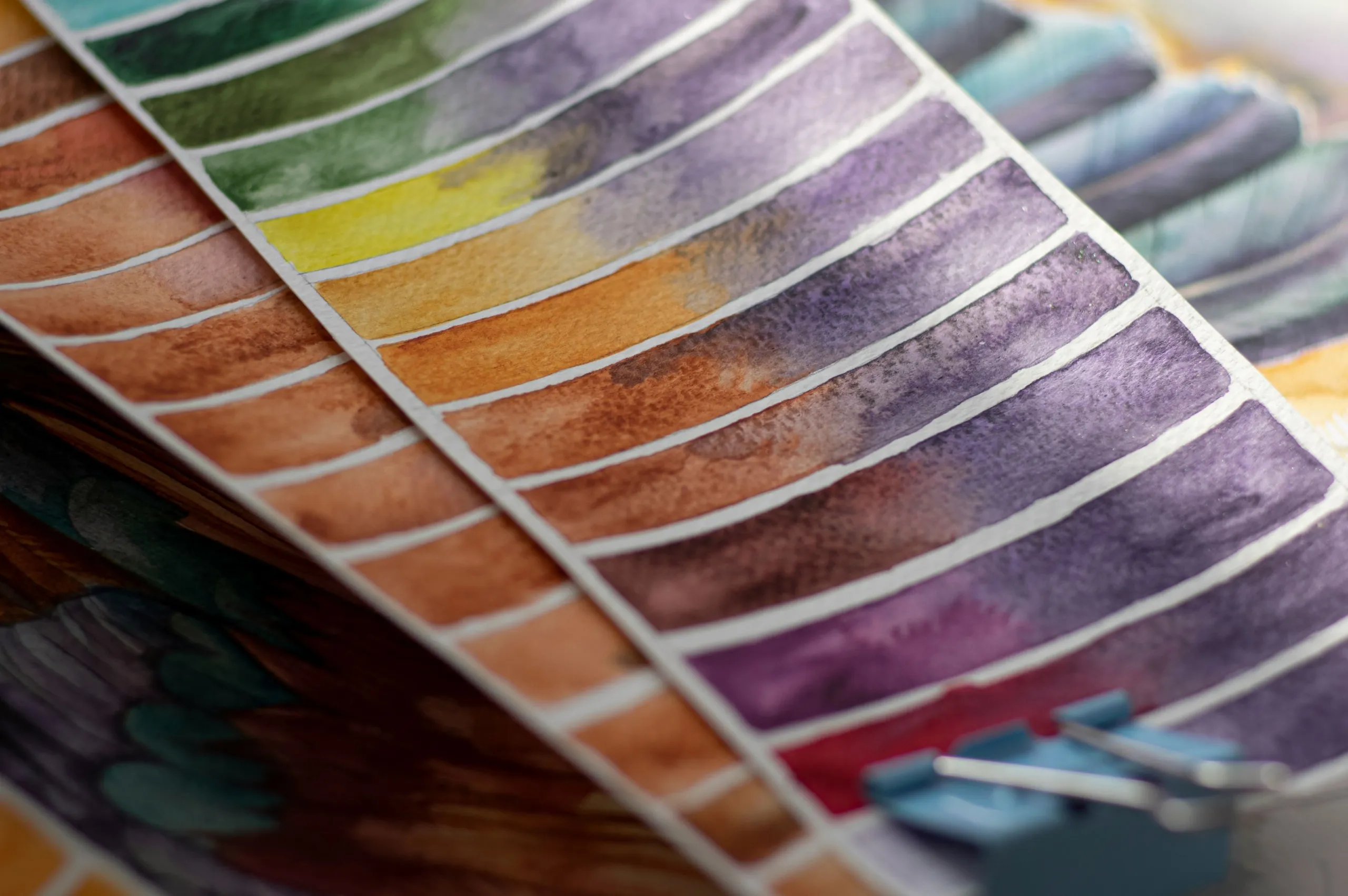
You will be introduced to your own palette of colors and the analyst will give you some tips to recognize these when shopping. Analysts with Luxury drapes will demonstrate these to help you envision how the colors appear in a variety of textiles and how they work together to create an easy and effective wardrobe.
Next, the analyst will demonstrate how to use your palette to make purchase decisions, in a process known as harmonizing. They may also demonstrate how to swatch makeup, jewelry, or any other item, using the same process. If you have clothing or other items to test with your Season, this is the time to discuss how they will work within your future wardrobe.
Makeup application, if desired, may be comprehensive or include blush and lip color only, which can be discussed with the analyst. Many analysts stock testers of the 12 Blueprints and/or Perfect Mood Board makeup lines in colors that correspond to the 12 Seasons.
Your Result
The analyst shows the drapes once more, so you can see the full effect. When clothing, makeup, and hair color support one another, you see what Kathryn Kalisz meant:
Take charge of the image you project. You leave with awareness, knowledge, and the tools to manage it on your own.
Your Tools
The analysis gives you awareness and knowledge. Shop for the tools to use them: swatch sets to choose your wardrobe neutrals, makeup in colors already matched to your Season to wear your palette, and a chapter on your Season from Return to Your Natural Colours to apply it in practice.

Standard of Service
Chrysalis Color was created as an initiative of 12 Blueprints and combines the training methodologies of Christine Scaman of 12 Blueprints and Terry Wildfong of Your Natural Design.
These instructors have worked closely together, ever since Terry trained Christine in the SciART system in 2009. Their courses are carefully designed so content and approach correspond. As a result, the courses combine Terry’s decades of PCA experience – which includes in-person training with Kathryn and becoming SciART’s first certified trainer – and Christine’s over 20 years as a practicing veterinarian, with similar methods and safeguards for decisions that doctors use for diagnosis. Three more instructors teach these methods: Anna Łazarska, Cate Linden, and Roxanne Harrington. Each trains analysts one on one, to the same standard.
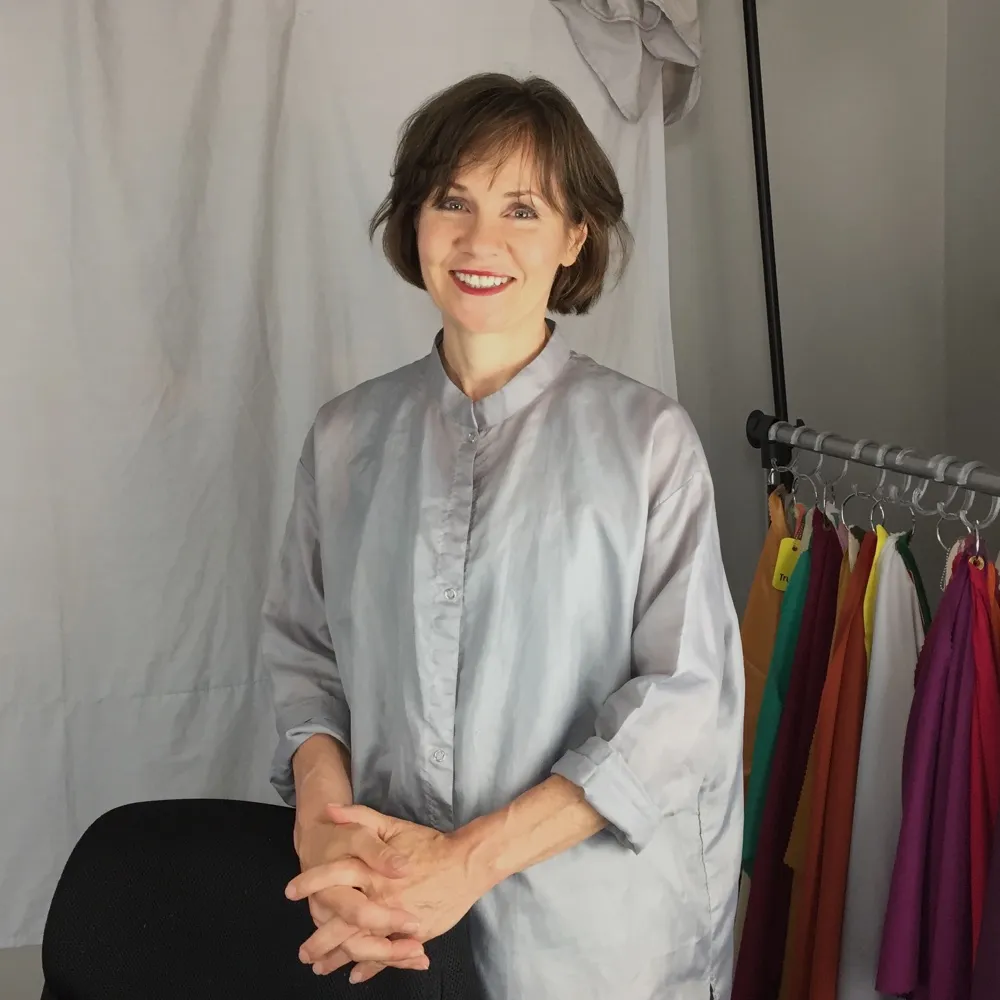
Christine Scaman of 12 Blueprints, initiator of Chrysalis Color, in her studio.
Rigorous Testing Procedures
Chrysalis Color analysts maintain a high standard of accuracy in PCA. The method is rigorous, in-person, and comparison based. A correct Season can only be determined by evaluating undertone and overtone in person. Neither cameras nor computers can approach, let alone replace, the human sense of sight. For this reason, analysts do not test from appearance overview, photographs or video, believing the built-in error to be too high. All analysts use a deliberate, structured process, in neutral gray surroundings and with full-spectrum lighting
Calibrated Fabric Test Drapes
Chrysalis Color analysts use drapes created by 12 Blueprints and NDU Colors. The drape colors are calibrated to the SciART standard. Additions have been made to the Test drapes. Red, yellow, green and blue are represented in every Season. The drapes measure 18×34 inches – large enough to simulate the effect of garments and to evaluate the energetic equivalence (demanding equal visual attention) between the color and the person. Colors are assessed one at a time, so the analyst can measure the optical effects that each color will have on the person’s face.